
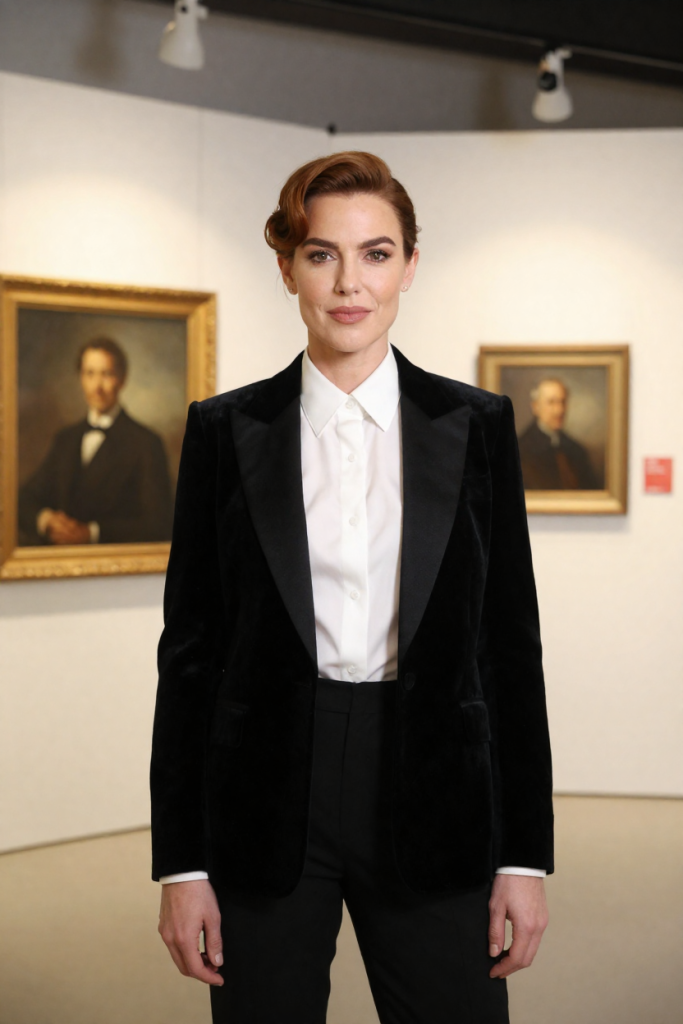
Provenance is the paper trail that follows a work: who made it, when, and how it passed from hand to hand. It sounds like a concern for old masters, but a working AI creator accumulates exactly the same problem in miniature. Your character has been live for eight months. A platform asks whether she is a real person. A collaborator claims the look was theirs. A series needs re-issuing and nobody remembers which version of her brief produced the good month. Provenance is the file that answers all of it — and for a fictional performer, it is a file you either built from day one or cannot build at all.
What goes in the file
The catalogue entry, versioned. The anchor text — age stated as a number (25 or over), hair, build, face details, signature item — saved as version 1 with a date. Every deliberate change (a haircut arc, a new signature) becomes version 2, dated, never an overwrite. Old sets remain reproducible because their entries survive.
The first frames. Keep the earliest generations of the character, including the culls if storage allows. A dated trail from first frame to current work is the strongest ordinary evidence that a performer was invented and developed in your studio, not taken from anyone’s photographs.
The reference portrait. The single face source used for swaps, kept with a note of when it was adopted. Swaps across a year of content should all trace back to this one file — that trace is the consistency system and the audit trail in one.
Consent records, where real people touch the work. Fictional characters need no consent, but the moment a real collaborator’s photo, face or likeness enters the workflow — a swap target, an undress source — the record changes category. Identification, scope, term and the written agreement belong in the same folder as the content they cover.
The working rule
Keep the provenance file with the catalogue, not in a chat thread or a downloads folder. When a platform, a collaborator or your future self asks “where did this come from,” the answer should be a folder you can open, not a story you reconstruct. Houses that can show their paper keep their walls. It works the same at our scale.