
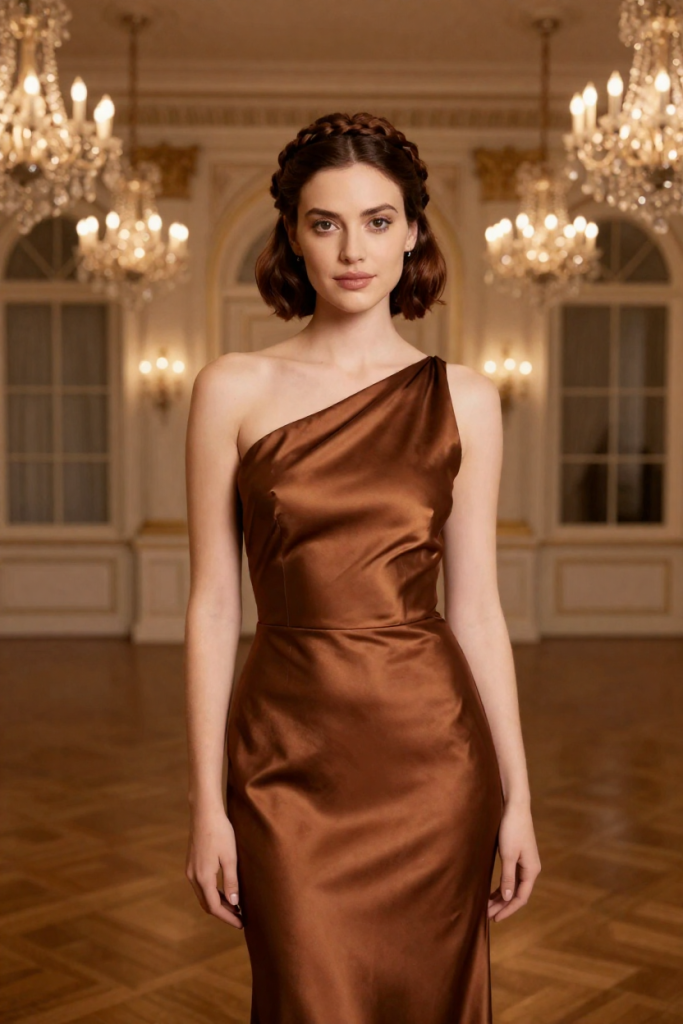
Creators usually publish a series the way it was produced: chronologically, everything included, the strongest frame wherever it happened to land. A gallery hangs differently. The sequence is an argument — an opening piece that establishes the sitter, a middle that varies her, a closer that the room is remembered by — and roughly a third of what was produced never reaches the wall at all. Preparing a series for the gallery means making those decisions deliberately, in the right order, before anything goes public.
Step one: the cull, with reports
Run every candidate through a condition report first (composition, entry match, hands and edges, light). The cull is not “frames I like” — it is frames that passed inspection, sorted by strength. Expect to keep the best third. The rest are not failures; they are the cost of the third that remains, already paid at 6 credits a frame.
Step two: sequence the wall
Open with recognition: the frame where she is most herself, full entry visible, the signature item clear. Follow with variation — rooms, wardrobe, light — keeping one anchor constant per frame so the eye always has her to hold onto. Place the most dramatic piece last, not first; a wall that peaks early feels like it is winding down. If the series feeds a store pack, the cover lot is chosen from the opening or closing frame, never the middle — covers and arguments obey the same logic.
Step three: spend finishing credits by position
Not every hung frame earns the same finish. Openers and closers get the full treatment: restoration passes for small artefacts, then the upscaler for big-wall spec. Middle frames ship at production size unless a report flagged a fix. This is where the exhibition budget is won or lost — finishing everything equally costs roughly double for a difference viewers cannot locate.
Step four: the privacy pass
Before publishing, confirm what the wall will claim. Everything in the series is fictional or consented, the provenance file matches the frames going up, and each piece is set public deliberately, one by one — the studio default is private, and the gallery should only ever contain what you chose to hang. Publish, then look at the wall as a stranger would: one sitter, one world, no weak frame apologising for the rest. That is a series that was hung, not uploaded.